Thursday, August 24, 2017

PDF Ebook Flowers for Algernon, by Daniel Keyes

PDF Ebook Flowers for Algernon, by Daniel Keyes

Outstanding product is now offered below. Guide entitled Flowers For Algernon, By Daniel Keyes is offered in this internet site as one of the latest updated to serve. Yeah, this is among advised publications that currently many individuals look for guide. You might become one of those who are extremely lucky today. You locate this site that will provide you the most effective referral of this book.
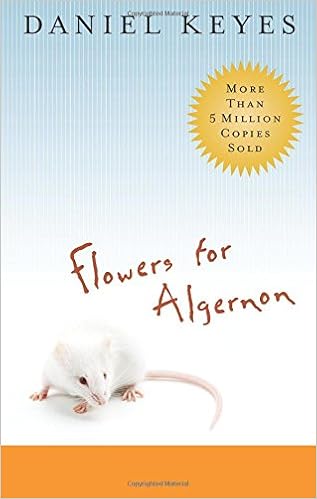
Flowers for Algernon, by Daniel Keyes

Flowers for Algernon, by Daniel Keyes


Flowers for Algernon, by Daniel Keyes


PDF Ebook Flowers for Algernon, by Daniel Keyes

Think about a great book, we remind regarding Flowers For Algernon, By Daniel Keyes This is not a new latest publication, but this book is constantly remembering constantly. Many people are so pleasant for this, authored by a well-known author. When you wish to acquire this advantage in some stores, you could not discover it. Yeah, it's restricted currently, most likely or it is always sold out. However right here, no worry about it! You can get it whenever you desire and every where you are.

Do you need the literary works sources? Law or national politics books, religions, or sciences? Well, to verify it, juts seek the title or motif that you need based on the classifications given. Nevertheless, previous, you are here in the great website where we present the Flowers For Algernon, By Daniel Keyes as one of your sources. Also this is not also known as much; you could know and recognize why we truly recommend you to read this adhering to book.

From the collections, guide that we offer describes one of the most needed publication worldwide. Yeah, why do not you become one of the globe visitors of Flowers For Algernon, By Daniel Keyes With lots of oddly, you can turn as well as keep your mind to get this publication. In fact, guide will certainly reveal you the reality and also fact. Are you interested what kind of lesson that is provided from this book? Does not lose the time more, juts read this book any time you want?

To make sure, many individuals additionally have downloaded the soft file of Flowers For Algernon, By Daniel Keyes though this website. Only by clicking link that is offered, you can go directly to guide. One more time, this publication will certainly be truly important for you to read, even they are easy, and also they will lead you to be the much better life. So, what do you think about this updated book collection? Let's inspect it now and prepare yourself making this book as definitely your collection and analysis materials. Believe it!

Flowers for Algernon, by Daniel Keyes

Review

PRAISE FOR FLOWERS FOR ALGERNON"A tale that is convincing, suspenseful and touching."--The New York Times "An ingeniously touching story . . . Moving . . . Intensely real."--The Baltimore Sun

Read more

From the Back Cover

Charlie Gordon is about to embark upon an unprecedented journey. Born with an unusually low IQ, he has been chosen as the perfect subject for an experimental surgery that researchers hope will increase his intelligence-a procedure that has already been highly successful when tested on a lab mouse named Algernon. As the treatment takes effect, Charlie's intelligence expands until it surpasses that of the doctors who engineered his metamorphosis. The experiment appears to be a scientific breakthrough of paramount importance, until Algernon suddenly deteriorates. Will the same happen to Charlie? WINNER OF THE HUGO AWARD AND THE NEBULA AWARDThe classic novel that inspired the Academy Award-winning movie Charly Daniel Keyes, the author of eight books, was born in Brooklyn, New York, and received his B.A. and M.A. degrees from Brooklyn College. Professor emeritus at Ohio University, he lives in Boca Raton, Florida.

Read more

See all Editorial Reviews

Product details

Paperback: 311 pages

Publisher: Harcourt; 1st edition (June 14, 2004)

Language: English

ISBN-10: 015603008X

ISBN-13: 978-0156030083

Product Dimensions:

4.7 x 0.8 x 7.4 inches

Shipping Weight: 6.4 ounces (View shipping rates and policies)

Average Customer Review:

4.7 out of 5 stars

1,818 customer reviews

Amazon Best Sellers Rank:

#4,909 in Books (See Top 100 in Books)

I was recommended this book by my mother who read it as a child. Even though I knew how it would end the book filled me with hope on every new page, until it didn't. I caught myself hoping that my mother hadn't remembered the ending correctly, and everything would be fine. Flowers for Algernon tackles many complex issues from the mistreatment and misunderstanding of the mentally handicapped, the burden of knowledge that every person with common sense thinks they experience but doesn't truly understand, to the meaning of existence and the human condition. You don't read Flowers for Algernon to feel happy at the end. You read it to cry, take a shuddering breath, and then step out into the sunshine with a greater appreciation for life and the struggles of your fellow human beings.

I read Flowers for Algernon last week for Banned Books week. I had heard about it over the years, but I was never required to read it. Since I read very little science fiction, I never thought I’d enjoy reading it. Enjoyment isn’t exactly what I got from this book–enlightenment might be more appropriate.In case you don’t know what the book is about, here is a brief synopsis. Charlie was a mentally challenged young man who wanted nothing more than to be smarter than he was. He volunteered for an experimental surgery that was supposed to increase his intelligence. The surgery had previously only been done on mice, and Algernon the mouse was the result of an earlier operation. When Charlie saw how Algernon navigated a maze with ease, he was convinced that the operation would be successful.Charlie’s surgery was also a success, but his ever increasing intelligence caused difficulties in his relationships. His “friends” at work found out very quickly that he was no longer a target for their teasing, to which he had always been oblivious. They were so uncomfortable that they complained to the owner of the bakery he had been working at for years. He was let go.He tried having relationships with women, but his emotional intelligence had not progressed on the scale of his intellect. The teacher who had taught him for years ultimately ended their budding relationship, because he was so far ahead of her intellectually, she could no longer keep up.He reached a point at which he understood that his improvement was only temporary. He watched Algernon regress until all his progress was gone. Then Charlie himself began that backward slide.I was heartbroken to see his realization that the people he thought were his “friends” were being cruel to him all along. Increased awareness and understanding brought him nothing but pain. I was almost thankful at the end when he reached a point of being somewhat stable, even though he may not have been even as intelligent as he was when he started.I asked myself if he would have truly consented to the surgery if he had known what would happen to him afterwards. Did he actually have capacity to consent?I don’t know if I was supposed to wish that increasing intelligence was a possibility for people with mental challenges, but I finished the book with a feeling of discomfort that his life was seen on the same level as that of a mouse in the eyes of the people performing the experiment.It was ultimately a book that raised a lot of questions in my head and heart. There aren’t many answers to be found–just more questions.

This is probably the most difficult review I've written. Its hard to know what to say. If I'd read more reviews I might not have read this, but it endes up being one of the only books I've ever read in one sitting... And like the greatest books... One I'll never forget.As someone who's struggled with mental illness, confusing limitations, and my place in the world, as well as someone who later got me/cfs and lost even more independence, I relate so much to this book... Even though the main character is developmentally disabled, there's so much insight in this book.I'll tell you, the end will seem sad at first, but has with it its own wisdom and inspiration. Reminding us like all things in this world, bittersweet is still sweet.I hate sad endings to an extreme, but i don't regret reading this book.Ironically, in Charlie's lostness, he found the wisdom he searched for all along & the journey is well worth the read!

This story (short and long forms) won a Hugo and a Nebula award about 50 years ago. I read it as a child, never forgot it, and on reread the story still resonates. The book is written in simple sentences suitable to both children and adults. A retarded man is given an operation to increase his intelligence. Algernon, a mouse, is given the same operation. What makes the tale particularly poignant is the quotation at the beginning in which it is noted that one can be blinded either by going from darkness to light or from light to darkness--and others should not laugh at the traveller regardless of direction. On one level the tale is simple. On another, it addresses emotional v intellectual growth, the complexity of families, the issue of how those who appear different are treated, and the question of what is ultimately important. This is a classic, "must read" book for everyone. One caveat is that it should not be enjoyed as an audio book alone, because much of the protagonist's development is given by the spelling and phrasing of his journal entries. Audio book plus print (as I read it this time) is wonderful. A wonderful book that everyone should know

I have never loved a character more than I loved Charly Gordon. Within pages, I was attached to his character and rooted for him until the very end, even as the conclusion became obvious and unavoidable. Warning: probably will unexpectedly make you cry (or at least make you incredibly sad several times) so plan out a good (private) time to read it. This is a book that will really impact the way you treat others and will probably change a lot of the things you say/do. It gives a little bit of relief to those trying to find a way to be happy in a judgemental world and is incredibly beautiful.

This a book which I read as a child and opened my eyes to different viewpoints on life. It was good enough that I had to buy it as an adult to read to my wife. The story is straightforward and easy to comprehend at any level. Don't think that makes it boring though; the character development is really the driving force behind the plot.

Flowers for Algernon, by Daniel Keyes PDF
Flowers for Algernon, by Daniel Keyes EPub
Flowers for Algernon, by Daniel Keyes Doc
Flowers for Algernon, by Daniel Keyes iBooks
Flowers for Algernon, by Daniel Keyes rtf
Flowers for Algernon, by Daniel Keyes Mobipocket
Flowers for Algernon, by Daniel Keyes Kindle

Flowers for Algernon, by Daniel Keyes PDF

Flowers for Algernon, by Daniel Keyes PDF

Flowers for Algernon, by Daniel Keyes PDF

Friday, August 18, 2017

Download The Shallows: What the Internet Is Doing to Our Brains

Download The Shallows: What the Internet Is Doing to Our Brains

Currently, exactly what do you think of the emerging books this moment? Many books exist as well as released by lots of authors, from several nations in this world. But, have you to be a lot more selective to select one of the best. If you are confused on just how you choose the book, you could draw from the subject to offer, the writer, and the referral.

The Shallows: What the Internet Is Doing to Our Brains

The Shallows: What the Internet Is Doing to Our Brains


The Shallows: What the Internet Is Doing to Our Brains


Download The Shallows: What the Internet Is Doing to Our Brains

After waiting for some moments, ultimately we could present The Shallows: What The Internet Is Doing To Our Brains in this internet site. This is just one of the books that mostly most waited and also desired. Spending more times to wait on this book will certainly not be matter. You will certainly likewise discover properly to prove the number of people talk about this publication. After the launching, this publication can be located in numerous resources.

And here, that book is The Shallows: What The Internet Is Doing To Our Brains, as you require it conforming to the subject of your challenges. Life is challenges, works, as well as tasks are additionally obstacles, as well as there are many points to be obstacles. When you are definitely baffled, just get this book, as well as pick the essential information from the book. The content of this might be complicated as well as there are several styles, however checking out based on the subject or reading page by web page can aid you to understand merely that publication.

Te publication is advised because of some features and also reasons. If you have become aware of the author of The Shallows: What The Internet Is Doing To Our Brains, you will certainly be so sure that this publication is extremely proper for you reading this book implies you can obtain some expertise from this wonderful author. When you review it frequently and also flawlessly, you can actually locate why this book is advised. However, when you just wish to complete reading it without comprehending the meaning, it will certainly imply absolutely nothing.

Now, when you require a brand-new pal to accompany you encountering and resolving the difficulties, The Shallows: What The Internet Is Doing To Our Brains is the candidate to recommend. It could accompany you any place you go advertisement you need. It's developed for soft file, so you will certainly not feel difficult to locate as well as open it. Juts open the tab and then review it. By doing this can be done obviously after you are getting the documents using this internet site. So, your work is by clicking the link of that publication to go to.

The Shallows: What the Internet Is Doing to Our Brains

Review

“A thought provoking exploration of the Internet’s physical and cultural consequences, rendering highly technical material intelligible to the general reader.” - The 2011 Pulitzer Prize Committee“A must-read for any desk jockey concerned about the Web’s deleterious effects on the mind.” - Newsweek“Starred Review. Carr provides a deep, enlightening examination of how the Internet influences the brain and its neural pathways. Carr’s analysis incorporates a wealth of neuroscience and other research, as well as philosophy, science, history and cultural developments ... His fantastic investigation of the effect of the Internet on our neurological selves concludes with a very humanistic petition for balancing our human and computer interactions ... Highly recommended.” - Library Journal“This is a measured manifesto. Even as Carr bemoans his vanishing attention span, he’s careful to note the usefulness of the Internet, which provides us with access to a near infinitude of information. We might be consigned to the intellectual shallows, but these shallows are as wide as a vast ocean.” - Jonah Lehrer, The New York Times Book Review“This is a lovely story well told―an ode to a quieter, less frenetic time when reading was more than skimming and thought was more than mere recitation.” - San Francisco Chronicle“The Shallows isn’t McLuhan’s Understanding Media, but the curiosity rather than trepidation with which Carr reports on the effects of online culture pulls him well into line with his predecessor . . . Carr’s ability to crosscut between cognitive studies involving monkeys and eerily prescient prefigurations of the modern computer opens a line of inquiry into the relationship between human and technology.” - Ellen Wernecke,, The Onion A.V. Club“The subtitle of Nicholas Carr’s The Shallows: What the Internet is Doing to Our Brains leads one to expect a polemic in the tradition of those published in the 1950s about how rock ’n’ roll was corrupting the nation’s youth ... But this is no such book. It is a patient and rewarding popularization of some of the research being done at the frontiers of brain science ... Mild-mannered, never polemical, with nothing of the Luddite about him, Carr makes his points with a lot of apt citations and wide-ranging erudition.” - Christopher Caldwell, Financial Times“Nicholas Carr has written an important and timely book. See if you can stay off the web long enough to read it!” - Elizabeth Kolbert, author of Field Notes from a Catastrophe: Man, Nature, and Climate Change“Neither a tub-thumpingly alarmist jeremiad nor a breathlessly Panglossian ode to the digital self, Nicholas Carr’s The Shallows is a deeply thoughtful, surprising exploration of our “frenzied” psyches in the age of the Internet. Whether you do it in pixels or pages, read this book.” - Tom Vanderbilt, author, Traffic: Why We Drive the Way We Do (and What It Says About Us)“Nicholas Carr carefully examines the most important topic in contemporary culture―the mental and social transformation created by our new electronic environment. Without ever losing sight of the larger questions at stake, he calmly demolishes the clichés that have dominated discussions about the Internet. Witty, ambitious, and immensely readable, The Shallows actually manages to describe the weird, new, artificial world in which we now live.” - Dana Gioia, poet and former Chairman of the National Endowment for the Arts

Read more

About the Author

Nicholas Carr is the author of The Shallows, a Pulitzer Prize finalist, and The Glass Cage, among other books. Former executive editor of the Harvard Business Review, he has written for The Atlantic, the New York Times, and Wired. He lives in Boulder, Colorado.

Read more

Product details

Paperback: 304 pages

Publisher: W. W. Norton & Company (June 6, 2011)

Language: English

ISBN-10: 9780393339758

ISBN-13: 978-0393339758

ASIN: 0393339750

Product Dimensions:

5.5 x 0.8 x 8.3 inches

Shipping Weight: 8 ounces (View shipping rates and policies)

Average Customer Review:

4.3 out of 5 stars

609 customer reviews

Amazon Best Sellers Rank:

#7,661 in Books (See Top 100 in Books)

The development of that magnificent resource for the mind, the Internet, has put us at a turning point in human history. The development of all the tools of the mind has provided turning points and in making his case Nicholas Carr takes us through what happened to us when we went from clay to papyrus to paper and from tablets to scrolls to books. With every one of these changes the world shifted some. Not as much as now though.At the same time that the Internet is changing the world, bringing us closer together around masses of information, it is changing our ability to think and it is changing our brains in dangerous ways. The issue is not the content of the Internet, but its process.The human adapts to its tools and its tasks. Give a man a hammer for a lifetime’s work and his body shapes to effectively drive nails. Take away his pen and give him a typewriter with a ball and his prose turns from fluid to staccato. (That happened to Nietzsche in the late nineteenth century.) In that process of adaption the brain, since it is not a machine but an organ, changes. These changes can be seen with instruments and their results observed in human behavior. This is the world of Nicholas Carr. I will describe a tiny fraction of what the Internet is doing to our brains.1) The brain, confronted with a glowing screen and the ability to hypertext its way from one interruption to another across the universe of knowledge from what its buddy in Australia thinks of rutabagas, to the spelling of rutabagas to the history of rutabagas to dishes that can be prepared from rutabagas leaves the brain sliding from one fact of surface interest to another fact even less useful, until it occurs to the brain to pursue the prompt on the pop-up menu and check the weather and get off of this slide onto the weather channel where a five minute video on playful seals on San Francisco Bay can be watched for free which does remind the brain that it could slide over to Facebook and find out if anyone “liked” the picture of the family cat posted an hour ago. And many do. Twenty-three “likes,” praise the Lord.Just as the carpenter’s arm grew it muscles to deal effectively with the hammer the brain changes to succeed in a slippy slidey world of itty bitty bits of knowledge intended to interest momentarily and then disappear.So what will happen when it confronts a life choice? Will this passive instrument skidding from meaningless bit to another meaningless bit see itself suddenly as an agent? A “decider?” Or will it in panic seek the next button to push, even if that button bears the label “Self Destruct?”According to Time magazine this is happening now in the Silicon Valley high schools; kids depressed and without a sense of agency pushed around by the ripples on the surface of the Internet are choosing to leave life. Rutabagas have lost their interest. Having your cat liked did not fill the hole intended for having yourself loved. And this child is not accustomed to doing things about things. This child does not do. This child is done to. With the same alacrity that he or she pursued the prompt to watch the seals he or she may “decide” it is time to end this.2) I discovered my wife of the last forty-three years with whom I have raised two children and now five grandchildren with much happiness when while sitting on her front lawn, I seriously told her my goals in life. She thought they were so funny she actually rolled over laughing. If I had instituted a computer search what algorithm would have found her an appropriate match? Yet this brain of mine sorted through whatever book-formed channels it had and locked in immediately on her as the “one,” the antidote to the man who takes himself too seriously. The Internet would have provided me many potential companions, each more serious than the last. That is the way it works. It finds my interests and then adds to the pile. If I follow its suggestions I become narrower and narrower, a better candidate to respond to the advertisers, a defined target, and a wealth of possibilities pass me by.3) For something to remain in long-term memory it must spend two hours in short term memory. (There is actually a tiny physical growth that must happen.) But on the trip through rutabaga land, things go in and out too quickly to be grafted on the long-term nodules. Of course it still exists in the computer’s memory. When you know you need it, it can be sought. However the advantage of the human memory is that it coughs up stored information when you need it but do not know you need it. Not only does your intellect call on your memory, but your memory initiates conversations with your intellect. You won’t have that ability any longer. And since your long-term memory is not being used the section of the brain devoted to long-term memory has already begun to shrink.Distant memories of your mother’s tears, your father’s embrace, your sisters admiration and your little brother’s needs will be crowded out of the brain, and I doubt if you will find them in Internet land either.4) There are now residential therapy centers to assist the hooked to unhook from the Internet. The Internet lights up the same section of the brain as does cocaine. Didn’t’ know those grade school kids were getting a buzz? Makes what may be happening to my grandchildren a little less cute and a little less funny.Read The Shallows yourself. What I have written is just a corner of the future described there. See if it scares you! And if it does, see who else you can scare with it. Hope they have enough of an attention span left to read the book. (A sign of the times is that people who used to write books no longer can read them. Not enough slippy and slidey. Boring!)Can the majority of us survive without complex and nuanced thought? Without deep and poignant memories? Do we want to?

I knew something was wrong when I would post online, waiting for anyone to respond.It becomes this obsession, small bits of human contact, mediated by the computer."This person likes what you wrote", digital pats on they back, they become addictive.I am five days clean from reddit.com. I've used drugs, no drug I've tried is as addictive as social media. The first day my entire body hurt. I just wanted to check my posts, refresh the front page. I knew it would be hard, I didn't know it would make me suicidal.I kept having these thoughts about missing out. How would I know the absolute latest information about the Las Vegas shooter? Even with a NYTimes subscription I felt left out.The endless conversations, arguments, quips. It feels like a huge extended family.I get why. It amplifies our conversations to make them seem outsized, but no one is really reading. It's non-stop entertainment. My views were never seriously challenged. Any belief, no matter how strange, a group is waiting to accept you.I want more real life friends and I can tell a reliance on the Internet has stunted my ability to relate to people in the real world.I'm getting over an addiction, now the work of living begins.

I loved reading, thinking, contemplating and attempting to understand complex concepts as a young man and adult. In the last 10 years that joy steadily declined, and I have become in my mind less able to do what I once loved. I thought it was aging, little did I know. If you love learning and thinking read this book. Carr has made a strong case for limiting our interaction with the WWW because it is transforming us into computers, not thinkers.

Lots to think about here for being such a short book.If you're looking at this, just go for it.It's a quick read that shouldn't keep you from your tech for too long. Read it on a Kindle for extra irony.The first half is largely a historical summary of communication and media, with the back half emphasizing the effects on our brains. It was written years ago, so it adds an interesting potency to see the impact today.

The Shallows: What the Internet Is Doing to Our Brains PDF
The Shallows: What the Internet Is Doing to Our Brains EPub
The Shallows: What the Internet Is Doing to Our Brains Doc
The Shallows: What the Internet Is Doing to Our Brains iBooks
The Shallows: What the Internet Is Doing to Our Brains rtf
The Shallows: What the Internet Is Doing to Our Brains Mobipocket
The Shallows: What the Internet Is Doing to Our Brains Kindle

The Shallows: What the Internet Is Doing to Our Brains PDF

The Shallows: What the Internet Is Doing to Our Brains PDF

The Shallows: What the Internet Is Doing to Our Brains PDF